
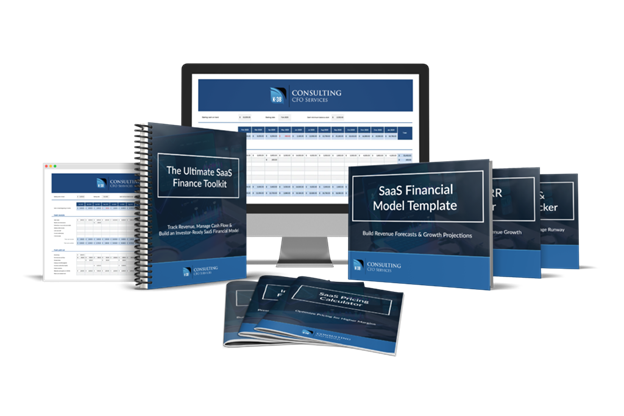
Launching a SaaS startup is an exciting journey, but growth without proper financial planning can quickly become risky. SaaS businesses operate on recurring revenue, making metrics like churn, monthly recurring revenue (MRR), and customer lifetime value (LTV) critical to success. Many founders focus on product development or marketing, but neglect the financial framework needed to sustain growth. A well-structured SaaS financial model template helps founders forecast revenue, manage cash flow, and make data-driven decisions.
Financial modeling transforms assumptions into measurable insights, giving SaaS startups a strategic roadmap for scaling efficiently.
Understanding SaaS Financial Metrics
SaaS companies must monitor key metrics that go beyond simple revenue tracking. These metrics include:
- Monthly Recurring Revenue (MRR) – Predictable revenue per month
- Annual Recurring Revenue (ARR) – Total recurring revenue for the year
- Customer Acquisition Cost (CAC) – Cost to acquire each new customer
- Customer Lifetime Value (LTV) – Total revenue expected from a customer
- Churn Rate – Percentage of customers leaving per month
Understanding these metrics is crucial for forecasting growth, controlling costs, and maintaining a healthy cash flow. A SaaS financial model consolidates all this data, making analysis straightforward and actionable.
Core Metrics Every Founder Should Track
| Metric | Purpose | Importance |
|---|---|---|
| MRR | Monthly revenue from subscriptions | Shows real-time growth trends |
| ARR | Total annual recurring revenue | Supports long-term planning |
| Churn Rate | Customer cancellations per month | Impacts retention and revenue stability |
| CAC | Cost of acquiring a customer | Guides marketing and sales efficiency |
| LTV | Revenue per customer over their lifetime | Indicates profitability of each user |
A healthy LTV:CAC ratio (commonly around 3:1) is essential for sustainable growth. A financial model automatically calculates these ratios and helps founders plan for long-term profitability.
Benefits of a Financial Model for SaaS Startups
- Revenue Forecasting – Predict MRR and ARR based on user growth and churn.
- Pricing Optimization – Analyze how different pricing affects revenue, churn, and customer retention.
- Operational Planning – Determine when to hire, expand teams, or invest in infrastructure.
- Cash Flow Management – Track runway and avoid unexpected funding gaps.
- Scenario Planning – Evaluate best-case, base-case, and worst-case scenarios to reduce risk.
A financial model allows founders to make informed, proactive decisions rather than reactive ones.
Risks of Scaling Without Financial Planning
Scaling without a model can lead to common mistakes:
- Overspending on hiring or marketing
- Running out of cash before reaching key milestones
- High churn eroding revenue growth
- Weak investor confidence due to lack of clear projections
By using a SaaS financial model, founders can anticipate these challenges and plan strategically.
Outsourced CFO Support for SaaS Startups
Hiring a full-time CFO can be expensive for early-stage SaaS companies. Outsourced CFO services, like those offered by K-38 Consulting, LLC, provide expert financial guidance, including:
- KPI tracking and dashboards
- Cash flow and runway management
- Fundraising preparation and investor reporting
- Pricing and revenue optimization
- Forecasting and scenario analysis
This support allows founders to focus on product and growth while maintaining financial discipline.
Investor Confidence Through Financial Transparency
Investors look for startups with predictable growth and clear financial planning. A detailed SaaS financial model demonstrates:
- Revenue growth trajectory
- Efficiency of marketing spend (CAC vs. LTV)
- Capital requirements and runway
- Retention strategies and churn analysis
- Break-even projections
Startups presenting structured, realistic data are more likely to secure funding and build long-term investor trust.
Explore a professional model here:
SaaS financial model template
Final Thoughts
A SaaS financial model is more than a spreadsheet — it is a strategic tool that provides clarity and control. It helps founders monitor metrics, anticipate challenges, and make informed decisions for sustainable growth. For SaaS startups aiming to scale efficiently, attract investors, and maintain financial stability, a SaaS financial model template is essential.
